The front door of a store, office or restaurant opens hundreds of times a day — and when it starts dragging, slamming, sticking or refusing to lock, it affects customers, staff and security all at once. Most commercial entrances in Toronto plazas, strip malls and office buildings are narrow-stile aluminum storefront doors with glass. They are tough, but they rely on a handful of moving parts that wear out with heavy use. This guide explains the most common aluminum storefront door problems, what causes them, what you can safely check yourself, and when to call a storefront door repair technician.
How an aluminum storefront door works
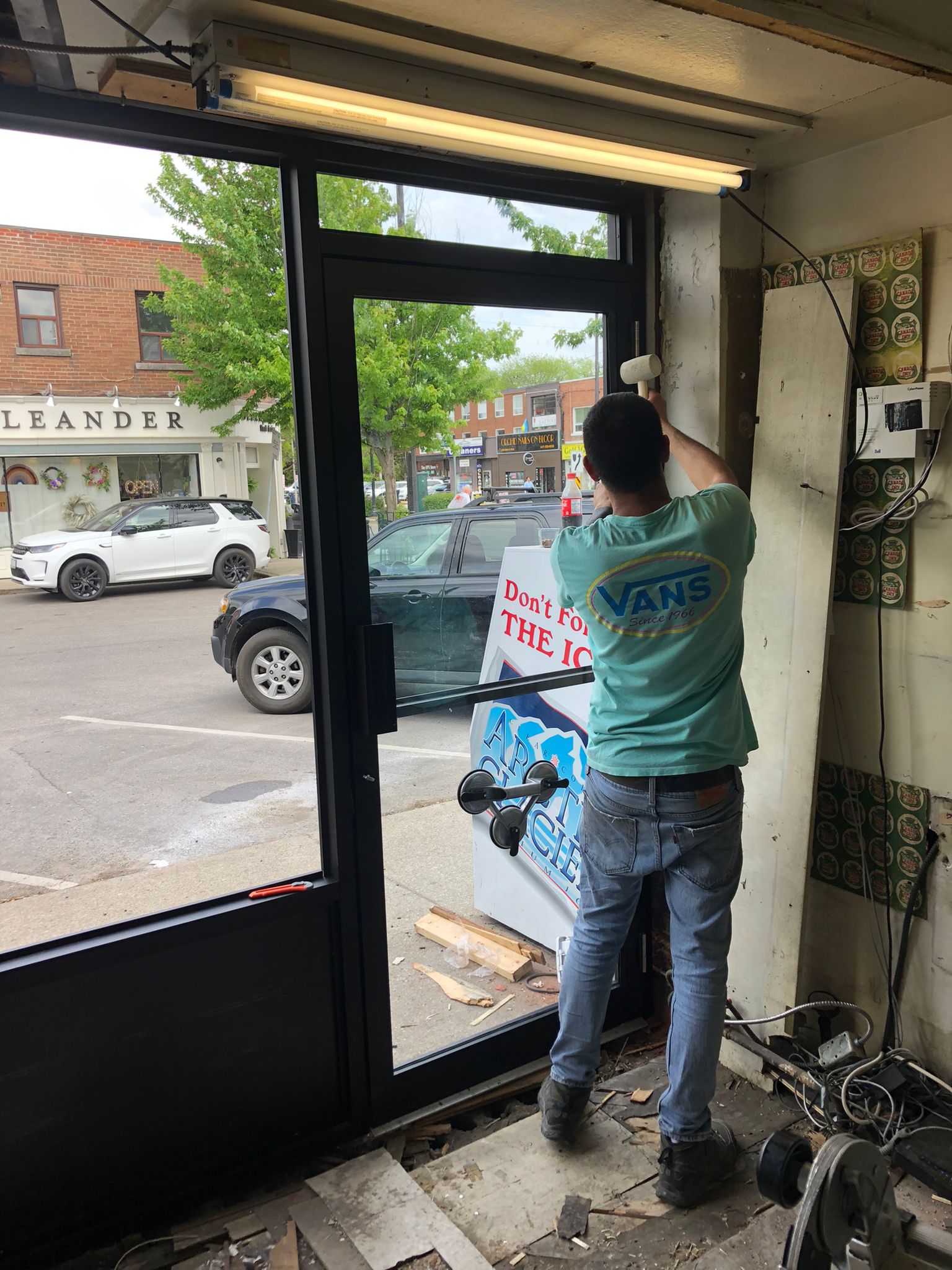
Knowing the parts makes problems much easier to diagnose. A typical storefront entrance includes:
- The door leaf — an aluminum frame (stiles and rails) holding a glass panel, set in place by glazing stops and gaskets.
- Hanging hardware — either offset pivots at the top and bottom, butt hinges, or a full-length continuous hinge. This hardware carries the entire weight of the door and glass.
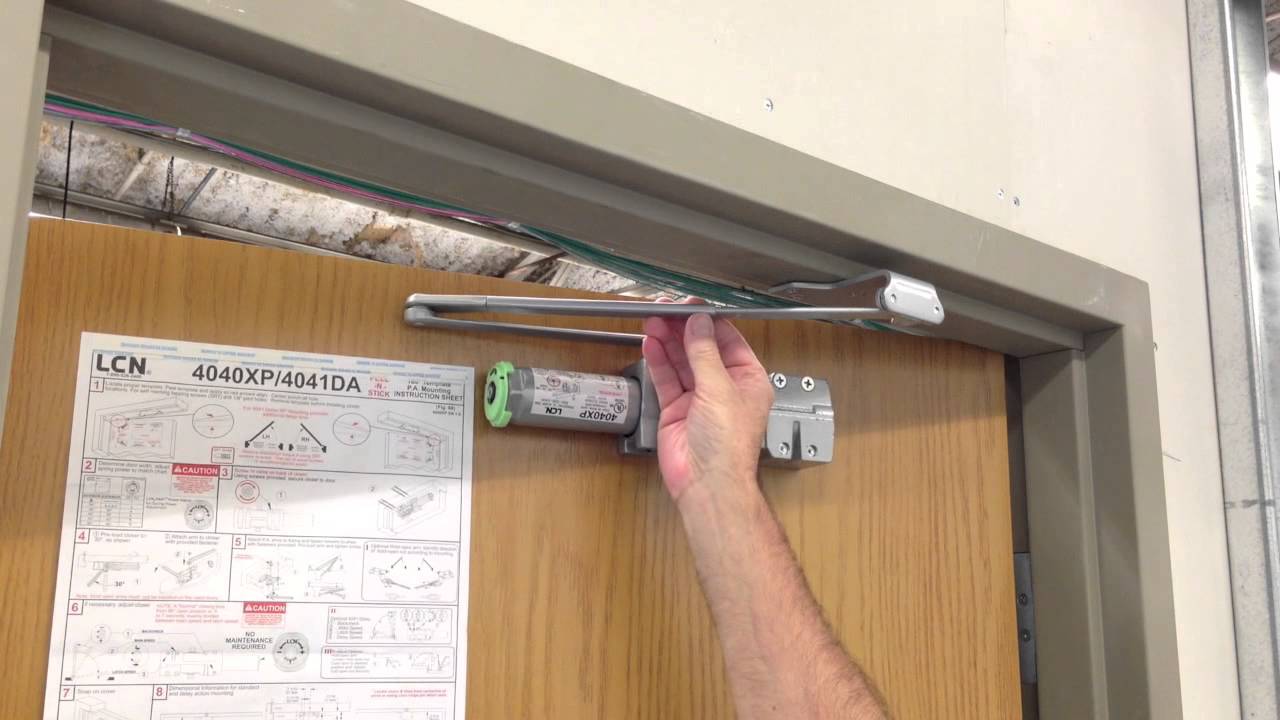
- A door closer — overhead surface-mounted, concealed in the header, or set into the floor — that controls how the door closes and latches.
- Locking hardware — usually a narrow-stile deadlock with a hook bolt or swing bolt, operated by a key cylinder, sometimes paired with a panic bar.
- Weatherstripping, threshold and sweep that seal out wind, cold and water.
When any of these wears out, the door stops closing, sealing or locking properly. Most storefront problems come down to one of three areas: hanging hardware, the closer, or the lock.
Door stuck, broken or forced?
Talk to a door technician now. Free estimates across Toronto and the GTA.
Problem 1: The door drags on the floor or rubs the frame
Worn bottom pivot
The bottom pivot carries most of the door’s weight. Over years of heavy traffic, the pivot bearing wears out, the spindle loosens, or the pivot plate cracks. The door drops on the lock side and starts scraping the threshold or rubbing the frame. You may notice a grinding noise, a visible gap at the top corner, or a door that has to be lifted to lock. Replacing the worn pivot — or converting to a continuous hinge — is one of the most common storefront repairs we do. See pivot door repair in Toronto.
Loose or failed top pivot or hinge
If the top pivot or hinge screws have loosened in the aluminum frame, the door leans out of square. Stripped screw holes in aluminum need proper repair, not just bigger screws.
Continuous hinge failure
Continuous (piano-style) geared hinges spread the load along the full height of the door and last much longer than pivots on high-traffic doors, but they can also wear or loosen. A failing continuous hinge shows up as sagging and binding along the whole edge.
What you can check yourself
- Look at the gap around the door: an even gap means hanging hardware is fine; a gap that is wider at the top on the hinge side and tight at the bottom on the lock side means the door has dropped.
- Clear debris and ice from the threshold so it is not mistaken for a hardware problem.
- Do not keep forcing a dragging door — it accelerates damage to the frame and closer.
Problem 2: The door slams, swings open, or will not close all the way
Closer out of adjustment
Door closers have separate valves for closing speed, latching speed and back-check. Seasonal temperature changes thicken or thin the hydraulic fluid, so a closer that worked perfectly in summer can slam in winter or close too slowly. A technician can adjust the valves so the door closes smoothly and latches every time.
Leaking or failed closer
Oil streaks on the closer body or the door glass mean the closer seals have failed. Once the fluid is gone, the closer cannot control the door, and it will slam or drift. A leaking closer needs to be replaced. See door closer repair.
Wind and pressure
Plaza entrances facing open parking lots catch a lot of wind, and buildings with HVAC pressure imbalance can push doors open. The right closer size, a working back-check and, where needed, a stronger arm help the door resist wind without being too heavy to open.
Problem 3: The lock will not engage or the key is hard to turn
Door has dropped out of alignment
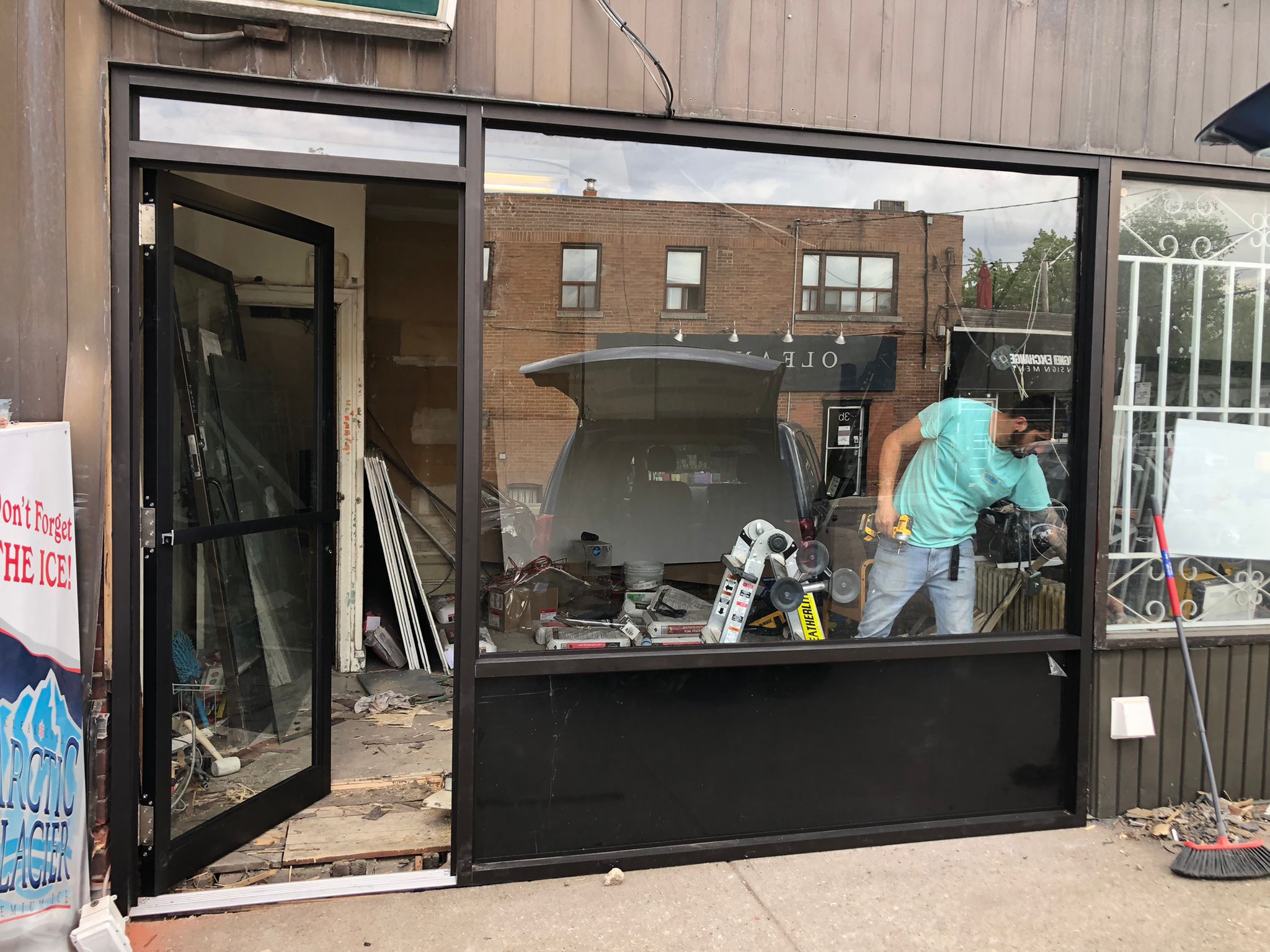
The most common reason a storefront lock stops working is not the lock at all — it is a door that has sagged so the hook bolt no longer lines up with the strike in the frame. You turn the key and feel the bolt hit metal. Fixing the pivots or hinge often fixes the lock at the same time.
Worn lock body or cylinder
Narrow-stile deadlocks wear out with daily use, and cylinders can be damaged by attempted break-ins. If the bolt is sticky, the key binds, or the lock was attacked, the lock body or cylinder needs replacing. We can also rekey storefront locks after staff turnover. See lock change services.
Frozen or debris-filled strike
In winter, moisture can freeze inside the strike pocket; dirt and debris can also block it. Keep the strike area clean and dry.
Problem 4: Broken or cracked glass
Storefront glass breaks from impacts, vandalism, temperature stress or break-ins. Commercial door glass should be tempered or laminated safety glass. When glass breaks, the opening needs to be secured immediately — boarded if replacement glass is not available the same day — and then reglazed with the correct glass, gaskets and stops. See glass door repair and emergency door repair in Toronto.
Problem 5: Drafts, leaks and cold entrances
Worn weatherstripping, a damaged door sweep, or a door that no longer closes square lets cold air and water in. In winter this makes the area near the entrance uncomfortable for customers and staff and increases heating costs. Replacing weatherstripping and correcting the door alignment usually solves it.
Repair or replace an aluminum storefront door?
Most storefront doors can be repaired for far less than the cost of replacement. Replacement makes sense when:
- The aluminum frame of the door is bent, cracked or corroded at the corners.
- The door has been forced repeatedly and the stiles are damaged.
- Hardware is obsolete and replacement parts are unavailable.
- You want to upgrade to a wider stile for stronger hardware, an accessible operator or better insulation.
When the door leaf is sound, replacing pivots or hinges, the closer and the lock restores it for years. For a door that is beyond repair, see commercial door repair and replacement.
Preventive maintenance for storefront doors
Busy entrances benefit from a quick check every few months:
- Check that the door closes and latches on its own from fully open and from halfway.
- Look for oil on the closer and for loose arm screws.
- Check the gap around the door for signs of sagging.
- Test the lock with the key from outside and the thumbturn or panic device from inside.
- Inspect weatherstripping and the sweep before winter.
- Keep the threshold clear of salt, ice and debris.
Catching a worn pivot or leaking closer early avoids an emergency call on a Saturday night when the door will not lock.
Safety and accessibility
A storefront door that is too heavy, closes too fast or does not latch can injure customers and creates accessibility barriers. The closer should be adjusted so the door is easy to open and closes in a controlled way. Where accessibility is a priority, an automatic operator can be added to many storefront doors. Exit doors with panic hardware must always release freely from the inside.
Storefront door hardware explained
Offset pivots vs. center-hung pivots
Most aluminum storefront doors use offset pivots: the pivot point sits slightly in front of the door face, so the door swings clear of the frame. Center-hung pivots sit in the middle of the door thickness and are usually paired with floor closers. Replacement pivots must match the type, offset and handing of the original, so it helps to have a technician identify them before ordering.
Surface closers, concealed overhead closers and floor closers
A surface-mounted closer sits on the door or frame and is the easiest to adjust and replace. A concealed overhead closer hides inside the header above the door and connects through an arm in the top rail — common on clean, modern storefronts. A floor closer is set into a box under the threshold and is often found on glass entrances in older buildings and malls. Each type fails differently, and floor closers in particular can suffer from water and salt getting into the box.
Hook-bolt deadlocks and panic devices
The hook bolt on a narrow-stile deadlock swings up into the frame strike and resists prying better than a straight bolt. Where the door is also an exit, a narrow-stile panic device or a push bar is used so people can always get out. Both must line up precisely with the frame to work properly.
Get it fixed properly the first time
Tell us what the door is doing and we will tell you if it needs repair or replacement.
Winter in the GTA: why storefront doors act up
Toronto winters are hard on commercial entrances. Cold thickens closer fluid, so doors close slowly and may not latch. Salt and slush get tracked onto the threshold and into floor closers and bottom pivots, causing corrosion. Ice can build up under the door and in the strike pocket. And temperature swings make aluminum frames expand and contract, which shows up as doors that rub in one season and leave gaps in another. A pre-winter check and closer adjustment prevents most of these problems.
Landlord or tenant: who fixes the door?
In many commercial leases, the landlord is responsible for the storefront system while the tenant is responsible for locks and day-to-day damage — but every lease is different. If you are a tenant, check your lease and notify the property manager quickly. If you manage a plaza, having one door company handle all the units keeps hardware consistent and makes it easier to plan maintenance.
What to tell the technician when you call
- Whether the door drags, slams, will not close, will not lock, or has broken glass.
- Whether the door is single or a pair, and whether it has a panic bar.
- Where the closer is: on the door, hidden in the header, or in the floor.
- Whether the door can still be secured tonight.
- A photo of the top and bottom corners on the hinge side and of the lock — this helps us bring the right parts.
Quick glossary of storefront door terms
- Stile: the vertical side members of the door frame. “Narrow stile” doors have thin sides, which limits the size of locks that fit.
- Rail: the horizontal top and bottom members of the door frame.
- Offset pivot: a pivot hinge mounted at the top and bottom of the door, set slightly off the door face.
- Continuous hinge: a full-height geared hinge that supports the door along its entire edge.
- Back-check: a closer setting that slows the door if it is flung open, protecting the frame and wall.
- Latch speed: the closer setting that controls the last few inches of closing so the door latches without slamming.
- Hook bolt: a curved lock bolt that hooks into the strike for better resistance to prying.
- Glazing stops and gaskets: the strips that hold and seal the glass in the door frame.
- Threshold and sweep: the strip on the floor under the door and the seal along the bottom of the door that block drafts and water.
Knowing these terms makes it easier to describe the problem on the phone and understand the repair quote.
Storefront door repair across the GTA
We repair aluminum storefront and glass entrance doors throughout Toronto and the Greater Toronto Area, including Etobicoke, North York, Richmond Hill, Mississauga, Brampton, Milton, Hamilton, Bradford, Newmarket and Bowmanville. See also storefront entry door repair in Toronto and aluminum door repair.
Frequently asked questions
Why is my storefront door dragging on the floor?
Usually the bottom pivot or hinge has worn out and the door has dropped on the lock side. Replacing the worn hanging hardware and re-aligning the door fixes it.
Why does my commercial door slam shut?
The door closer is either out of adjustment or leaking hydraulic fluid. Adjusting the closer valves often fixes it; a leaking closer needs to be replaced.
My storefront lock will not catch. Do I need a new lock?
Not always. Often the door has sagged so the bolt no longer meets the strike. Fixing the pivots or hinge and re-aligning the door usually restores the lock.
Can you repair a storefront door the same day?
Many repairs — closer adjustments, lock fixes and common pivot replacements — can be done in one visit. If parts must be ordered, we make sure the door is secure in the meantime.
Is a continuous hinge better than pivots?
On high-traffic doors, a continuous geared hinge spreads the load along the whole door and usually lasts longer than pivots, so it is a common upgrade when pivots keep wearing out.
Get your storefront door fixed
Call Door Repair Near Me at (647) 955-5637 or contact us to book a storefront door repair anywhere in the GTA.
Get it fixed properly the first time
Tell us what the door is doing and we will tell you if it needs repair or replacement.


