Coming home to a kicked-in front door, or opening your store to find the glass smashed and the lock pried, is stressful. In the first hour, you need to stay safe, document what happened and get the opening secured — and then get the door properly repaired so it is as strong as it was before, or stronger. This guide walks through exactly what to do after a break-in or attempted break-in in Toronto and the GTA, from the first phone calls to choosing between repair and replacement.

Step 1: Make sure everyone is safe
If you arrive and the door has been forced, do not go inside if you think someone may still be there. Leave, go somewhere safe and call 911. Once the police confirm the property is clear, you can start dealing with the damage. If nobody is in danger and the intruder is clearly gone, you can report a break-in through the non-emergency line or online reporting, depending on the situation.
Step 2: Document the damage before anything is touched
Before you clean up or call anyone to repair the door, take clear photos and video of:
Door stuck, broken or forced?
Talk to a door technician now. Free estimates across Toronto and the GTA.
- The door from inside and outside, and the whole frame.
- Close-ups of pry marks, splintered wood, bent metal, broken glass and the lock or strike.
- Anything damaged or missing inside.
These photos help with your police report and your insurance claim. Keep receipts for any emergency work, including board-up and lock changes.
Step 3: Call your insurance company
Most home and commercial insurance policies cover break-in damage, subject to your deductible. Ask your insurer whether they want to send an adjuster before permanent repairs, and whether you can go ahead with emergency securing right away — in almost every case they expect you to prevent further loss by securing the property.
Step 4: Secure the opening the same day
An unsecured door invites a second break-in and exposes you to weather. Depending on the damage, securing may mean:
- Re-hanging and latching the door if only the strike area of the frame was damaged.
- Installing a temporary lock or reinforcing plate if the lock was destroyed.
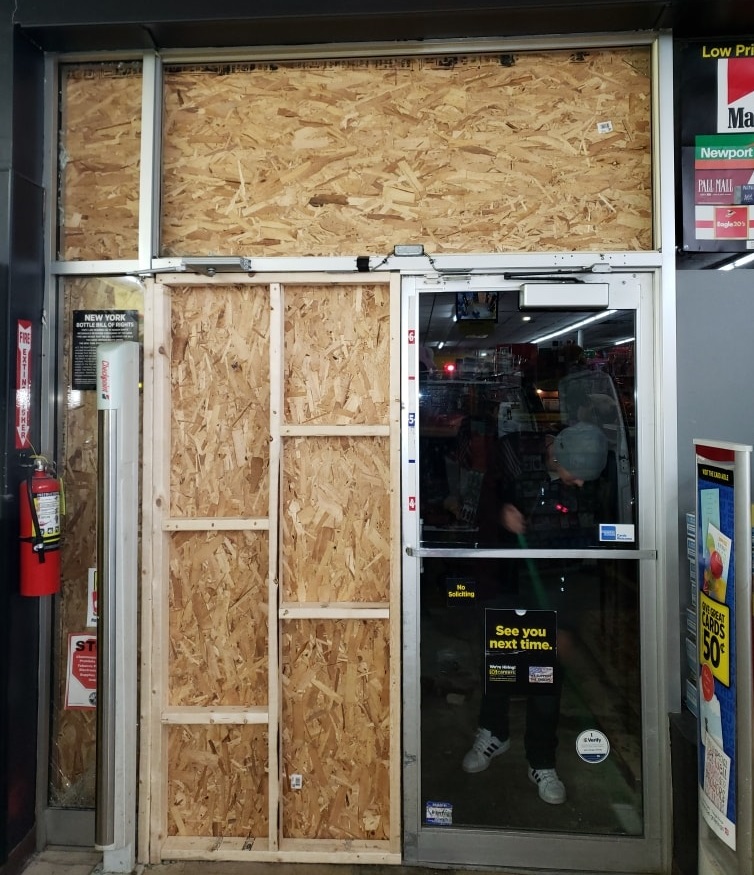
- Boarding up broken glass in a sidelight, storefront or patio door until new glass can be installed.
- Temporary boarding of the entire opening when the door or frame is too damaged to close.
Our emergency door repair team in Toronto handles same-day securing and repair, 24 hours a day.
How doors are usually forced — and what that means for the repair
Kick-in at the strike side
The most common residential break-in is a kick near the lock. The door often survives; what breaks is the frame around the strike plate, where the wood is thin and held only by short screws. Repairing this properly means rebuilding or replacing the damaged jamb section and installing a reinforced strike plate with long screws that reach the wall framing. See door frame repair.
Prying
A pry bar between the door and frame bends metal doors, splits wood and can bend the latch. On commercial aluminum storefront doors, prying often damages the hook-bolt lock, the frame stop and the glass stops. Pry damage usually needs new hardware and frame repair, and sometimes a latch guard to prevent it happening again.
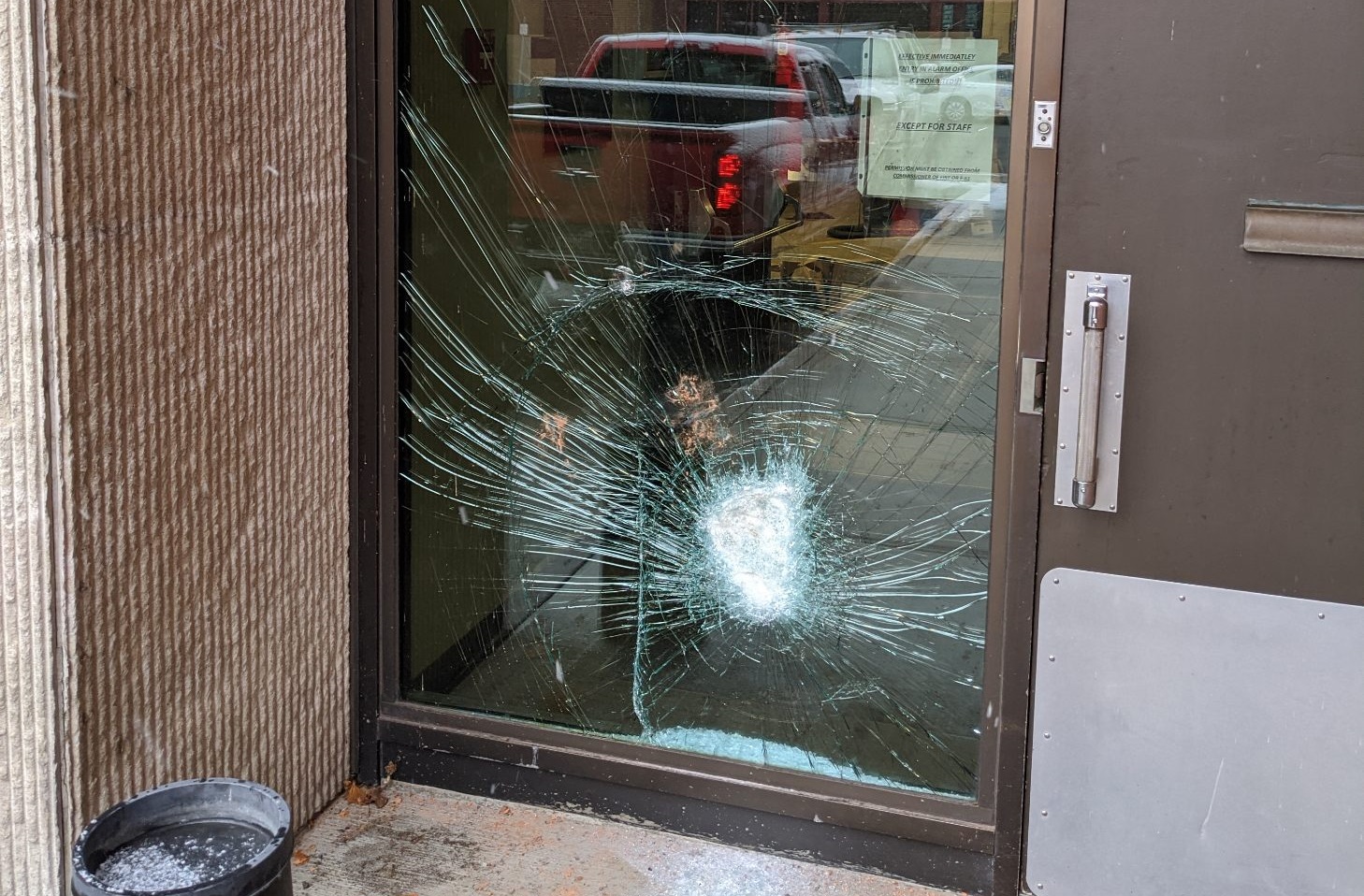
Broken glass
Smashing a glass panel near the lock, a sidelight or a storefront door is fast for an intruder. After replacing the glass, consider upgrading to laminated or tempered safety glass and moving to a double-cylinder or keyed lock where codes allow. See glass door repair.
Lock attacks
Some break-ins target the lock itself — snapping, drilling or picking the cylinder. A lock change with a higher-security cylinder is the right fix, and a lock change is wise after any break-in in case keys were taken.
Repair or replace the door after a break-in?
Many break-in doors can be repaired. Replacement is usually the better choice when:
- The door slab itself is split, warped or bent and will not close square.
- The frame is damaged along most of its length, not just at the strike.
- The door was already old, drafty or weak, and insurance will contribute to an upgrade.
When the door and frame are basically sound, repairing the frame, replacing the hardware and adding reinforcement often leaves you with a stronger entrance than before.
Make the door stronger than it was
A repair is the perfect moment to fix the weaknesses the intruder exploited:
- Reinforced strike plates and long screws anchored into the stud framing.
- Hinge-side reinforcement with longer hinge screws.
- A quality deadbolt with a full-length throw.
- Latch guards on outswing commercial doors to stop prying.
- Safety glass in sidelights and storefronts.
- Door viewers, lighting and cameras as deterrents.
Break-ins at stores, offices and plazas
For businesses, the priority is reopening safely. Commercial break-ins most often hit the aluminum storefront entrance and the rear steel door. We repair storefront doors, replace glass, rebuild frames, and repair or upgrade locks and exit hardware, so you can secure the premises the same night and open the next morning. See also commercial door repair.
Other entry points intruders use
Back doors and side doors
Back and side doors are often weaker than the front door and hidden from the street, which makes them a favourite target. Many are older hollow-core or lightweight doors with a single latch and no deadbolt. After a break-in through a rear door, consider replacing it with a solid-core or steel door in a reinforced frame, with a proper deadbolt.
Sliding patio doors
Patio doors can be lifted off worn tracks or forced at the latch. A track bar, a secondary foot lock and new rollers that keep the door seated properly make a big difference. Read our guide to sliding patio door problems for more.
Garage entry doors
The door from an attached garage into the house is frequently overlooked. If an intruder gets into the garage, that interior door is the last barrier, so it should be solid, self-closing where required, and fitted with a deadbolt.
Break-ins in condos and apartments
In condo buildings, a forced suite door is usually a solid fire-rated door in a steel frame. Damage typically affects the lock, the strike area of the frame and the closer. Because suite doors are part of the building’s fire separation, repairs must keep the door self-closing and latching. Your property manager may also need to be informed, especially if common-area doors, the lobby entrance or the parking garage door were involved.
If you rent, notify your landlord or property manager right away. They are usually responsible for the door and frame, but you are often responsible for securing your belongings, and they will want the door secured quickly as well.
Get it fixed properly the first time
Tell us what the door is doing and we will tell you if it needs repair or replacement.
What happens during an emergency door repair visit
- Call and triage. Tell us what was damaged — the door, frame, lock or glass — and whether the opening can still be closed. Photos sent by email help us bring the right parts.
- Arrival and assessment. The technician checks the door, frame, hinges, lock and glass, and explains what can be fixed immediately and what needs parts.
- Same-visit securing. The door is re-hung, the frame is temporarily reinforced, a working lock is installed, or broken glass is boarded so the property is secure.
- Permanent repair. If parts are needed — a new door, a frame section, a specific lock or custom glass — we return to complete the permanent repair.
- Paperwork for insurance. You receive a clear description of the damage and the work done to submit with your claim.
Preventing the next break-in: a practical checklist
Door and frame
- Use solid-core wood, fibreglass or steel exterior doors.
- Install a reinforced strike plate with 3-inch screws on every exterior door.
- Replace short hinge screws with long screws into the framing.
- Repair any rot or splits in the frame — a weak frame defeats a strong lock.
Locks
- Fit a quality deadbolt with a full one-inch throw on every exterior door.
- Rekey or change locks when you move in, lose keys or after staff turnover at a business.
- Do not hide spare keys outside.
Glass
- Upgrade sidelights and door glass near locks to laminated or tempered safety glass.
- Add security film where replacing glass is not practical.
Visibility and habits
- Keep entrances well lit, with motion lighting at back and side doors.
- Trim shrubs that hide doors and windows from the street.
- Use cameras or video doorbells as a deterrent and for evidence.
- Lock doors even when you are home, including the door from the garage.
When to call for an emergency door repair
Call right away — day or night — if:
- A door cannot be closed or locked after a break-in or attempted break-in.
- Glass in a door, sidelight or storefront is broken.
- The frame is split and the door swings open with a push.
- Keys were stolen and the locks need to be changed immediately.
- A commercial door cannot be secured at closing time.
Leaving a damaged door overnight risks a second entry, weather damage and, for a business, lost stock. Securing it the same day protects your property and keeps your insurance claim clean.
Common mistakes after a break-in
Cleaning up before taking photos
It is natural to want to sweep up the glass and put things back, but photos of the untouched damage are the strongest evidence for police and insurance. Take them first, then clean up.
Leaving the door “closed but not locked” overnight
Pushing a broken door shut and wedging a chair against it is not security. A door that can be pushed open from outside should be properly secured or boarded the same day.
Re-using the damaged strike plate
Screwing the old strike back into split wood looks fine but fails at the next kick. The damaged jamb needs to be rebuilt or replaced and reinforced.
Keeping the old locks
Even when the lock still turns, it may be damaged inside, and keys may have been taken. Change or rekey the locks.
Waiting for the adjuster before securing
Insurers generally expect you to prevent further damage. Secure the property and keep receipts; permanent repairs can wait for the adjuster if your insurer asks.
Security upgrades for businesses after a break-in
Commercial premises face different risks from homes: glass storefronts, rear laneway doors, and after-hours vacancy. After a commercial break-in, it is worth reviewing:
- Storefront locks: aluminum storefront doors typically use a narrow-stile deadlock with a hook bolt. Upgrading the cylinder and checking that the bolt fully engages the frame helps resist prying.
- Rear steel doors: add a latch guard over the gap at the lock, use non-removable hinge pins on outswing doors, and make sure the frame is anchored solidly.
- Exit devices: panic hardware must still let people out freely, but the outside trim and cylinder can be upgraded.
- Glass: laminated glass or security film slows down smash-and-grab entries.
- Key control: rekey after staff turnover so former employees’ keys no longer work.
For storefront work, see our Toronto storefront entry door repair page.
Emergency door repair across the GTA
We respond to break-in and emergency door calls in Toronto and across the Greater Toronto Area, including North York, Scarborough, Etobicoke, Mississauga, Brampton, Vaughan, Markham and Hamilton. For our full service list see emergency door repair and door break-in repair.
Frequently asked questions
What should I do first after a break-in?
Make sure everyone is safe and call the police if there is any chance the intruder is still there. Then photograph all the damage before anything is moved or repaired.
Can you secure my door the same night?
Yes. We provide 24/7 emergency service to re-secure doors, install temporary locks and board up broken glass so your home or business is not left open.
Does insurance pay for door repair after a break-in?
Many home and commercial policies cover break-in damage, subject to the deductible. Check with your insurer and keep photos and receipts for all emergency work.
Should I change my locks after a break-in?
Yes. Even if the lock looks fine, keys may have been taken or the cylinder weakened. A lock change is inexpensive peace of mind.
Can a kicked-in door frame be repaired?
Usually. The damaged jamb section can be rebuilt or replaced and reinforced with a heavy-duty strike plate and long screws, making it stronger than before.
Need help right now?
Call Door Repair Near Me at (647) 955-5637 — we answer 24/7 — or contact us for non-urgent repairs and upgrades.
Get it fixed properly the first time
Tell us what the door is doing and we will tell you if it needs repair or replacement.