
French doors are the most beautiful doors in a GTA home and, honestly, among the fussiest. Two tall doors, a lot of glass, a meeting stile in the middle and hardware at the top and bottom all have to line up perfectly for the pair to close, latch and seal. When one piece drifts even a few millimetres, you get a door that drags, a latch that won’t catch, or a cold draft right down the middle.

This guide covers the French door problems we fix most often in Toronto and the GTA, what causes them, what you can safely check yourself, and when it makes sense to call for residential door repair. If you need help today, call 647-955-5637.
How a French door is put together
Knowing the parts makes the problems much easier to understand. A typical double French door has:
Door stuck, broken or forced?
Talk to a door technician now. Free estimates across Toronto and the GTA.
- An active door that you use every day. It carries the handle, the latch and usually the deadbolt or multi-point lock.
- An inactive door that stays closed most of the time. It’s held in place by flush bolts or surface bolts at the top and bottom.
- An astragal, the vertical strip where the two doors meet. It covers the gap and holds weatherstripping.
- Hinges, usually three or four per door. They carry a lot of weight because of all the glass.
- A threshold and sweeps at the bottom to keep water and cold air out.
Interior French doors (between a living room and an office, for example) are lighter and simpler. Exterior French doors to a backyard or deck are heavier, have weatherstripping and a sill, and take the full beating of Toronto weather. Most of the trouble we see is with exterior pairs, although interior ones sag too.

Problem 1: The doors sag and rub at the top or the middle
This is the number one French door complaint. You notice the active door scraping the inactive one at the top corner, or the bottom corner dragging on the threshold. Sometimes the two doors no longer sit flush, so one sticks out past the other.
Why French doors sag
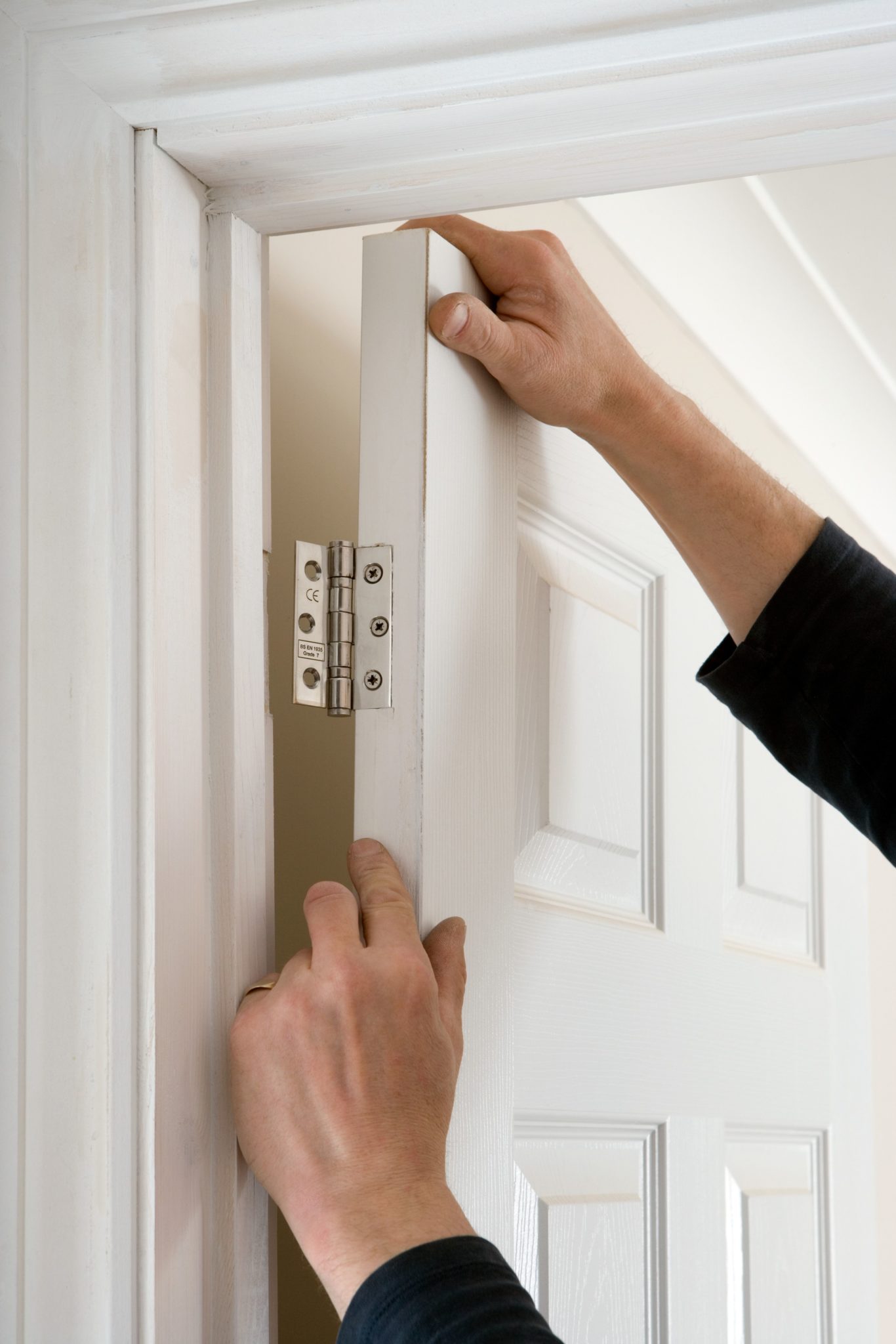
Glass is heavy. Every swing puts leverage on the top hinge, and over the years the screws loosen or strip out of the jamb. In older Toronto homes the screws often only reach the thin jamb instead of the framing behind it. Once the top hinge lets go a little, the far corner of the door drops.
What you can check
Open the door and tighten every hinge screw, especially on the top hinge. If a screw just spins, the hole is stripped. A longer screw into the framing is the proper fix. If the door is still out of line after tightening, the hinges themselves may be bent.
When to call a pro
If the jamb is split around the hinges, or tightening doesn’t help, the frame needs attention. We reset the hinges with long structural screws, shim where needed and bring both doors back into line. Damaged jambs are handled with door frame repair. You can also read our entry door frame replacement guide.
Problem 2: The latch won’t catch or the doors won’t stay closed
You push the active door shut and it bounces back open, or you have to slam it to get it to latch. On a French door the latch doesn’t go into a frame. It goes into the edge of the inactive door, so if either door moves, the latch misses.
Common causes
- Inactive door no longer held tight because a flush bolt has slipped out of its keeper.
- Strike plate on the inactive door out of line after the doors sagged.
- Weatherstripping on the astragal so thick or swollen that the door can’t close far enough to latch.
- A worn latch inside the handle set.
Quick checks
First make sure both flush bolts on the inactive door are fully engaged at the top and bottom. Then look at the strike on the inactive door for scrape marks. Marks above or below the opening mean the active door has dropped or shifted.
The real fix
We adjust or relocate the strike, re-seat the flush bolt keepers and fix any sag first, so the adjustment holds. Filing the strike opening bigger is a shortcut that usually leaves a door that rattles in the wind.
Problem 3: Flush bolts that stick, slip or won’t reach
Flush bolts are the small sliding bolts on the edge of the inactive door. They lock it into the head of the frame and into the sill. They get forgotten until they stop working.
What goes wrong
The bolts get stiff with dirt and paint, the keeper hole in the sill fills with grit or ice, or the door sags so the top bolt no longer lines up with its hole. On older doors the little lever snaps.
What you can do
Clean the bottom keeper hole with a vacuum and a small brush. A bit of dry lubricant on the bolt helps. Never paint over flush bolts.
When to call
If a bolt is broken, or the keeper won’t line up, we replace the bolts and keepers and re-align the door. Flush bolts matter for security: an inactive door that isn’t bolted can be pushed open together with the active one.
Problem 4: Drafts and light down the middle
If you can feel cold air or see daylight between the two doors, the astragal weatherstripping is worn, missing or not touching. It’s one of the most common French door complaints we get in winter, alongside the general winter door problems every GTA home deals with.
Causes
- Flattened or torn weatherstripping on the astragal.
- Doors that no longer sit flush, so one side of the seal doesn’t touch.
- Worn door sweeps or a threshold that has dropped.
- A gap at the top corner from sagging.
The fix
New weatherstripping is a cheap fix, but only after the doors are aligned. If you seal a sagging door, the new strip gets crushed on one end and gaps on the other. We align first, then replace the astragal seal, sweeps and corner pads so the pair seals top to bottom.
Problem 5: Swollen wood French doors
Wood French doors are lovely, but they move with the seasons. In humid Toronto summers they swell and stick. In dry winters they shrink and gaps appear. Unsealed edges, especially the bottom and top, soak up moisture.
What helps
Keep the paint or finish in good shape on all six sides of the door, including the top and bottom edges, which are often missed. If the door has swollen and binds, wait for drier weather before planing. Planing a swollen door in July often leaves a gap in January.
For rot, delamination or broken muntins, see wood door repair.
Problem 6: Locks and handles that are hard to use
Many exterior French doors use a multi-point lock: you lift the handle to throw bolts at the top, middle and bottom. When the doors are even slightly out of line, the handle gets very hard to lift, and people force it until something breaks inside the gearbox.
Signs of trouble
- Handle needs a lot of force to lift or lower.
- Key turns only when you push or pull the door.
- Handle feels loose or droops.
What to do
Stop forcing it. Most of the time the lock is fine and the door alignment is the problem. If the gearbox is already broken, we replace it with a matching unit. For keyed cylinders and security upgrades, see door lock change in Toronto.
Problem 7: Cracked or foggy glass
French doors are mostly glass. A crack from a slammed door, or a fogged sealed unit between panes, is common on older doors. Fog means the seal on the insulated glass unit has failed, so it won’t insulate as well.
A cracked or fogged sealed unit can usually be replaced without replacing the whole door. If the door also needs other work, it’s worth comparing the cost of new glass against a new door. Our door repair vs replacement guide walks through that decision.
How French door materials affect repairs
Wood French doors
Wood is the classic choice in older Toronto neighbourhoods. It can be planed, patched and refinished, which makes it very repairable, but it reacts the most to humidity. Expect seasonal sticking if the finish isn’t kept up, and watch the bottom rails, where water sits and rot starts first.
Steel French doors
Steel pairs are strong and secure, but they dent, and once the paint is scratched near the bottom they rust. Steel doors are heavy, so hinge sag is common. A dent near the latch edge can stop the pair from meeting properly.
Fibreglass French doors
Fibreglass doesn’t swell or rust and holds paint well, which is why it’s popular for replacements. It’s still heavy with all that glass, so hinge screws and alignment need the same attention as any other French door.
Vinyl and aluminum-clad units
Many newer homes and condos have vinyl or clad patio-style French doors with adjustable hinges. These can often be fine-tuned with the hinge adjusters instead of shimming, as long as you know which way each screw moves the door.
What affects the cost of French door repair
We quote after seeing the doors, because two jobs that sound the same can be very different. These are the main factors:
- Whether the frame is sound. Tightening hinges is quick. Rebuilding a split jamb takes longer.
- Hardware availability. Common flush bolts and strikes are easy to source. Some multi-point gearboxes must be matched by brand.
- Glass. Sealed units are made to size, so a glass replacement usually needs a second short visit.
- Door material. Wood may need planing and refinishing; steel may need dent or rust repair.
- Access. Doors to a raised deck or a condo balcony can take more set-up.
Send a photo of the doors closed and a close-up of the gap in the middle, and we can usually tell you on the phone whether it’s a simple adjustment.
Get it fixed properly the first time
Tell us what the door is doing and we will tell you if it needs repair or replacement.
French door repair checklist for homeowners
Every spring
- Tighten all hinge screws on both doors.
- Clean the flush bolt holes and the threshold.
- Check the astragal seal for tears or flat spots.
- Touch up paint on door edges, top and bottom included.
Every fall, before the cold
- Close the doors and look for daylight at the middle, top and bottom.
- Test the latch and lock without forcing the handle.
- Replace sweeps that are torn or flattened.
- Make sure the threshold drains and isn’t sitting in water.
Any time
- Don’t let the doors slam in the wind. That’s how hinges and glass get damaged.
- Don’t force a stiff handle. Call for an alignment instead.
Repair or replace your French doors?
Usually worth repairing
- Sagging, rubbing or doors that no longer meet flush.
- Latch or flush bolt problems.
- Drafts from worn weatherstripping.
- A single cracked or fogged glass unit.
- Stiff multi-point locks caused by alignment.
Usually time to replace
- Rot through the bottom rails or the frame and sill.
- Several fogged glass units at once on an old door.
- A warped door that won’t come back into plane.
- You want better security or energy performance than the old pair can give.
If replacement makes more sense, we handle door replacement and door installation across the GTA. Thinking about switching to a slider? See sliding door repair and patio door repair in Toronto for how they compare day to day.
French doors vs. sliding patio doors: which holds up better?
Homeowners often ask this when their French doors start giving trouble. Both can last a long time. French doors open fully and look great, but they need more alignment care because of the two-door design and hinges carrying heavy glass. Sliding doors take less floor space and have fewer alignment issues, but rollers and tracks wear out and need cleaning. Neither is “better”. It comes down to how you use the doorway and how much upkeep you’re happy with.
What a professional French door repair visit includes
- Inspection of both doors: hinges, gaps, flushness, glass, bolts, lock and sill.
- Alignment: reset hinges with structural screws, shim and square the pair.
- Hardware: adjust or replace the strike, flush bolts and keepers, and service the lock.
- Sealing: new astragal weatherstripping, sweeps and corner pads as needed.
- Testing: open, close, latch and lock several times, then check for daylight and drafts.
Most French door repairs are finished in one visit. If something needs ordering, like a specific lock gearbox or glass unit, we secure the door so it locks properly in the meantime.
Emergency French door repair
If your French doors were forced in a break-in, or a door won’t lock at night, we offer emergency door repair in Toronto. Break-ins on French doors usually damage the inactive door’s bolts and the astragal, not just the lock. Our guide on what to do after a break-in covers the first steps.
French door repair near me: areas we serve
We repair French doors in homes across Toronto and the GTA, including Toronto, North York, Etobicoke, Scarborough, East York, Leaside, Markham, Richmond Hill, Thornhill, Vaughan, Mississauga, Brampton, Oakville and Hamilton.
French door repair FAQ
Why do my French doors not close in the middle?
Usually one or both doors have sagged, or the inactive door’s flush bolts aren’t fully engaged. Tighten the hinge screws and check the bolts first. If that doesn’t fix it, the doors need re-aligning.
Can you fix a draft between French doors?
Yes. We align the doors and replace the astragal weatherstripping, corner pads and sweeps so the seal closes the whole height of the opening.
Do I need new French doors if the glass is foggy?
Not always. A fogged sealed glass unit can often be replaced on its own. If several units have failed and the door has other problems, replacement may cost less overall.
How long does French door repair take?
Most alignment, hardware and weatherstripping repairs are done in a single visit of a couple of hours.
Do you repair interior French doors too?
Yes, interior and exterior French doors, wood, steel and fibreglass.
Book French door repair near you
Doors dragging, not latching or letting in cold air? Call Door Repair Near Me at 647-955-5637 or send us a message. We’ll tell you whether it’s a quick adjustment or a bigger repair before any work starts.
Get it fixed properly the first time
Tell us what the door is doing and we will tell you if it needs repair or replacement.